

How to Create an Effective Home Workout Routine for Beginners
- September 10, 2026
- 0
Starting a home workout routine can feel surprisingly difficult when you have no idea where to begin. You might have a few pieces of equipment, plenty of motivation,


9621 Agnes Crossing, Lake Suzanneview, New Mexico Island 84604-9295.
Starting a home workout routine can feel surprisingly difficult when you have no idea where to begin. You might have a few pieces of equipment, plenty of motivation,
Starting a home workout routine can feel surprisingly difficult when you have no idea where to begin. You might have a few pieces of equipment, plenty of motivation, and a saved folder full of workout videos, but that does not automatically create a plan that you can follow consistently. A good home workout routine should be simple enough to fit into your normal schedule while still giving your body enough variety to improve strength, mobility, endurance, and overall fitness.
The good news is that beginners do not need an expensive gym membership or a complicated training program. With some basic planning, a realistic schedule, and a willingness to progress gradually, your home can become a perfectly useful place to exercise. The key is creating a home workout routine that you can actually maintain rather than one that looks impressive on paper but becomes exhausting after a week.

The best place to begin is with a realistic home workout routine rather than an ambitious one. If you currently exercise very little, jumping straight into six intense workouts every week is unlikely to be sustainable. Start with two or three planned sessions and give yourself enough recovery time between them.
Think about when you genuinely have free time. A 30-minute workout that you complete consistently is more useful than a 90-minute session that you keep postponing. Your home workout routine should fit around your work, studies, family responsibilities, sleep, and other parts of your life.
For many beginners, three sessions per week provide a comfortable starting point. You can gradually add more activity as your fitness improves and your workouts begin to feel easier.
Before choosing exercises, decide what you actually want your home workout routine to accomplish. Different goals require slightly different approaches.
Someone interested in building strength may spend more time on resistance exercises, while someone focused on general fitness may combine strength work with cardio. If improving mobility is your priority, stretching and controlled movement can take a larger role.
You do not have to choose only one goal. A balanced home workout routine can include strength training, cardiovascular exercise, mobility work, and core exercises. Having a clear purpose simply makes it easier to choose exercises and measure your progress.
A beginner home workout routine does not need dozens of different exercises. Start by learning a handful of fundamental movement patterns and gradually become more comfortable with them.
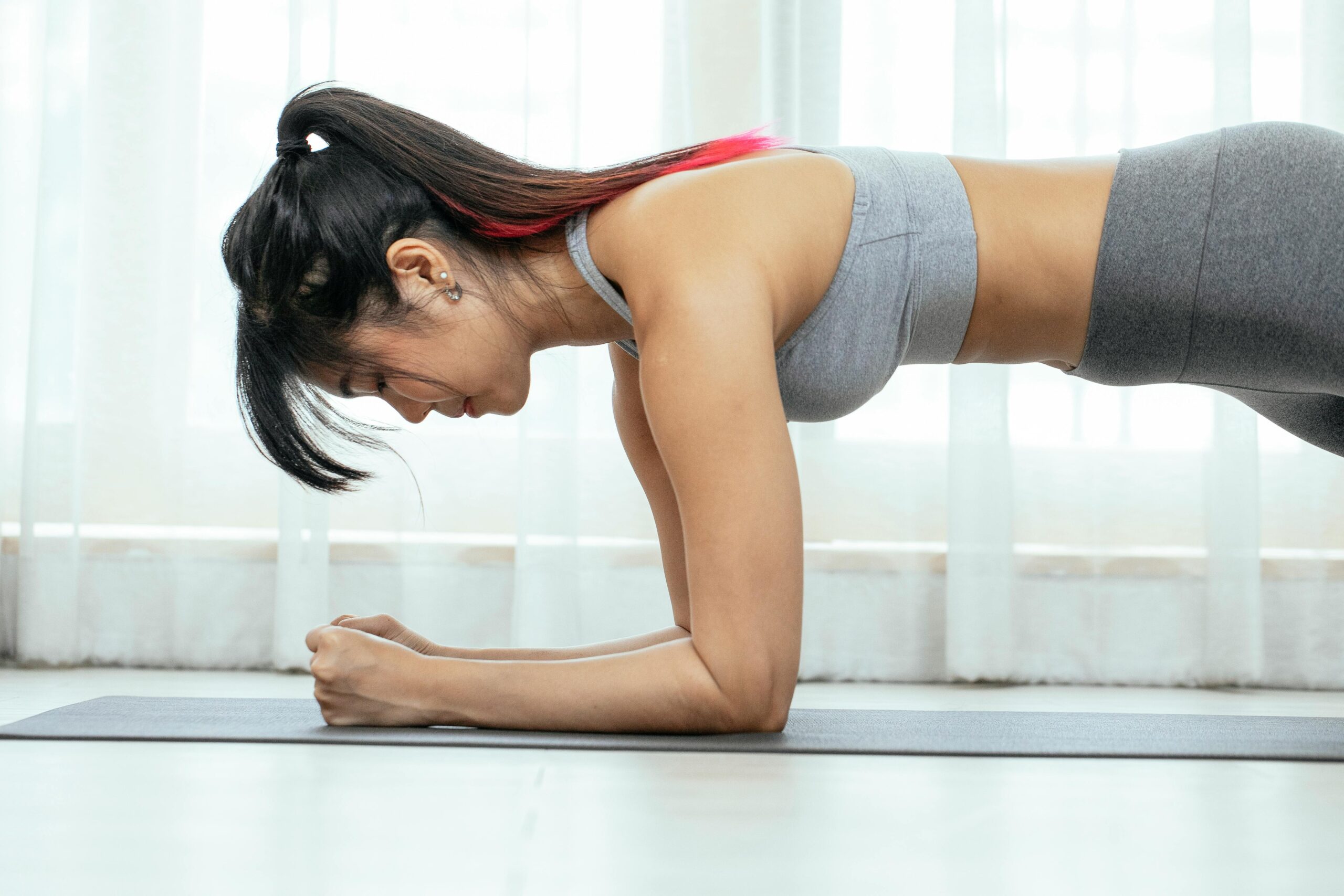
Squats train the lower body, while movements such as glute bridges can strengthen the hips and glutes. Push-ups work the chest, shoulders, and triceps, while rows using resistance bands or suitable household equipment can train the upper back. Planks and other controlled core exercises can help develop trunk stability.
The goal is not to collect as many exercises as possible. A useful home workout routine repeats important movements often enough for you to improve your technique while still giving your muscles enough variety.
Strength training should be an important part of a beginner home workout routine. You can begin with bodyweight exercises before deciding whether you need additional equipment.
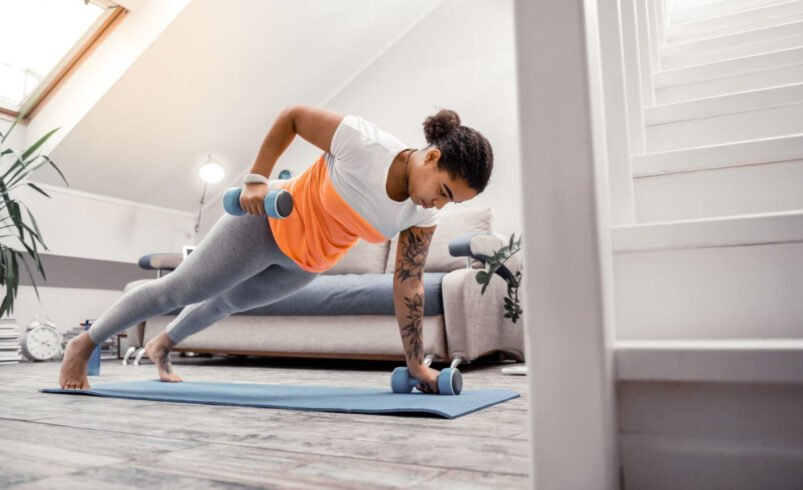
Bodyweight squats, lunges, push-ups, glute bridges, planks, and controlled calf raises can create a surprisingly challenging workout. Resistance bands and adjustable dumbbells can provide additional options later.
The important thing is progression. Once an exercise becomes noticeably easier, you can increase repetitions, add resistance, slow down the movement, increase the number of sets, or move toward a more challenging variation. This gradual progression keeps your home workout routine useful as your fitness level develops.

A complete home workout routine should not ignore cardiovascular fitness. Cardio does not necessarily mean spending an hour running on a treadmill. Walking, cycling, dancing, step exercises, jogging in place, and short low-impact circuits can all increase your heart rate.
Choose activities that you actually enjoy. If you hate a particular form of cardio, you are less likely to continue doing it. Your home workout routine should make regular movement feel achievable rather than like another chore.
You can also combine cardio and strength work in a circuit. Perform several exercises one after another with short breaks, then repeat the circuit. Keep the intensity appropriate for your current fitness level, especially during your first few weeks.
One of the biggest beginner mistakes is assuming that longer workouts are automatically better. They are not. A focused 20- to 40-minute home workout routine can be enough when you are starting out.
Shorter sessions also make consistency easier. You can fit a workout into a lunch break, before dinner, or during a free part of your morning without completely rearranging your day.
As your endurance improves, you can increase the duration gradually. There is no need to prove your fitness during your first session. A sustainable home workout routine should leave you feeling that you could return and do it again rather than completely drained.
You do not need to turn your home into a commercial gym to build an effective home workout routine. Bodyweight exercises can take you a long way, particularly during the beginner stage.
If you want additional resistance, consider equipment that gives you several exercise options. Resistance bands are compact and versatile, while dumbbells can make many familiar movements more challenging. A workout mat can also make floor exercises more comfortable.
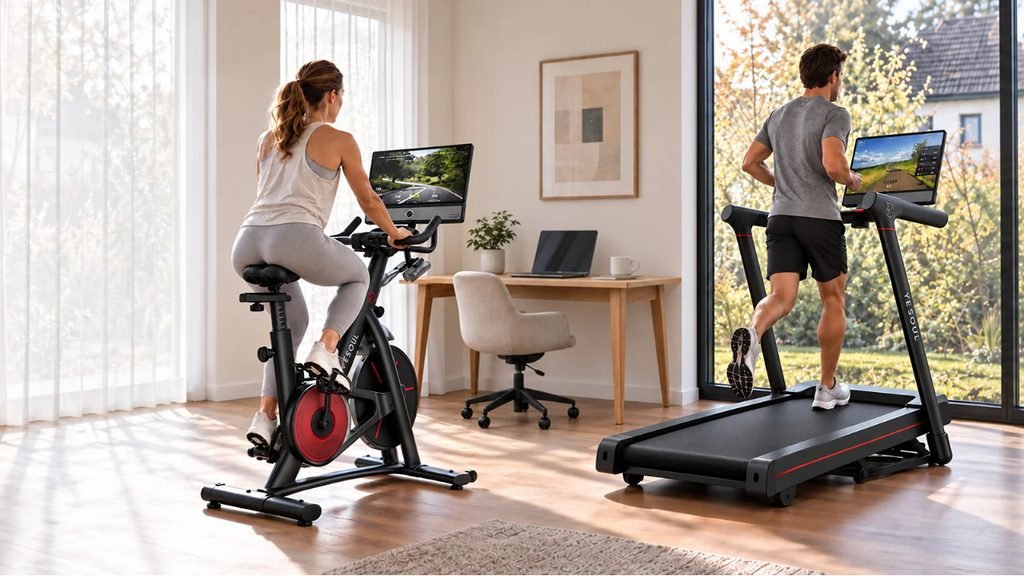
For people who enjoy indoor cycling or other forms of home cardio, larger equipment can become part of the setup. The important thing is to buy equipment because it supports your home workout routine, not because you feel that owning more equipment automatically makes the routine better.
Having a weekly structure makes a home workout routine easier to follow. Instead of deciding what to do every time you exercise, assign a general purpose to each session.
For example, Monday could focus on full-body strength, Wednesday could combine cardio and core work, and Friday could return to full-body strength. You can use the days between workouts for walking, mobility work, stretching, or rest.
The exact schedule is less important than consistency. If your timetable changes frequently, create a flexible home workout routine that allows you to move sessions around without abandoning the entire week.
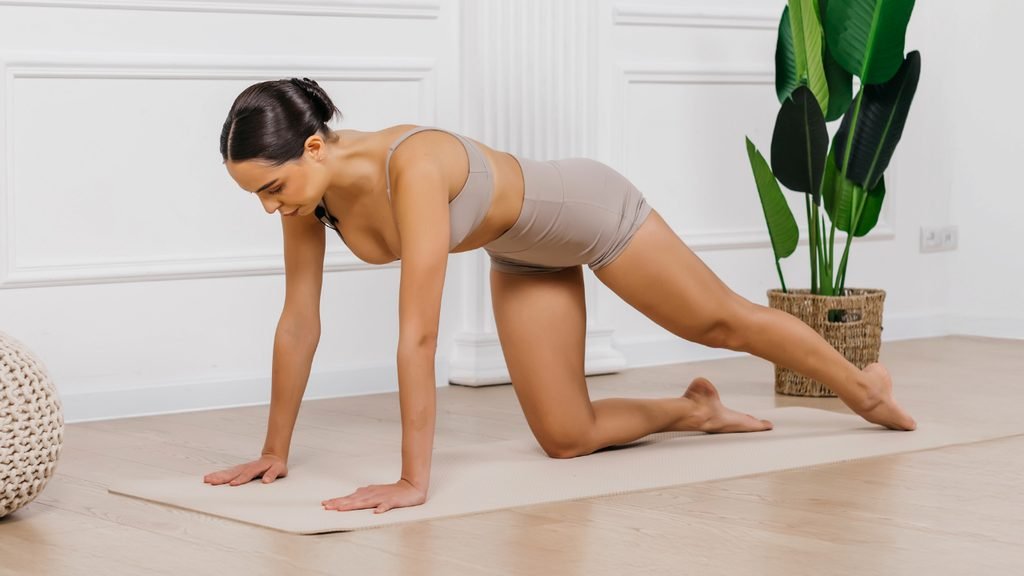
Good technique matters more than performing a large number of repetitions. During a beginner home workout routine, take time to understand how each movement should feel and which muscles are supposed to be working.
Start slowly rather than rushing through repetitions. Keep movements controlled and use a range of motion that you can manage comfortably. Online demonstrations can help you understand basic exercises, but avoid copying advanced workouts simply because they look impressive.
If something causes sharp or unusual pain, stop rather than trying to push through it. A sensible home workout routine should challenge you without encouraging you to ignore warning signs from your body.
Progress is what turns a basic home workout routine into a long-term training plan. You do not need to make every workout harder. Instead, look for small improvements over time.
You might complete an extra repetition, use slightly more resistance, perform a movement with better control, or need less rest between sets. These small changes are meaningful because they show that your body is adapting.
Keep a simple record of your workouts. Writing down exercises, repetitions, sets, and resistance can make your home workout routine easier to adjust. After several weeks, you will be able to see progress that may otherwise be difficult to notice.
Rest days are not wasted days. Recovery is an essential part of any home workout routine because your body needs time to adapt to training.
Beginners may experience muscle soreness when they start exercising. Gentle walking, light mobility work, stretching, adequate sleep, and normal balanced meals can support recovery. You should also avoid repeatedly training the same muscles hard without giving them enough time to recover.
A good home workout routine balances training and recovery rather than treating every day as an opportunity to exercise harder. If you are constantly exhausted, struggling with persistent soreness, or losing motivation, your schedule may need adjustment.
Motivation is useful when you are beginning a home workout routine, but it should not be the only thing keeping you active. Motivation naturally changes from day to day.
Creating a regular workout time can make exercise more automatic. Preparing your clothes beforehand, keeping equipment accessible, and deciding what you will do before the workout begins can remove unnecessary decisions.
You should also avoid thinking that one missed session ruins your progress. If you miss Monday, continue on Tuesday or Wednesday. The strength of a home workout routine comes from returning to it repeatedly, not from achieving perfect attendance.

Enjoyment can make a major difference in whether your home workout routine lasts beyond the first few weeks. Play music you like, follow a workout video occasionally, exercise with a friend virtually, or change your exercises when you become bored.
You can also create small milestones. Perhaps your first goal is completing three workouts each week for a month. Later, you might aim to perform more push-ups, hold a plank longer, or increase the resistance you use.
Your home workout routine should evolve with you. If something consistently feels boring or impractical, replace it with an alternative that trains a similar movement or fitness quality.
After several weeks, take a look at how your home workout routine is working. Are the workouts still challenging? Are you recovering properly? Do you enjoy the schedule? Are you making gradual improvements?
If everything feels easy, increase the challenge carefully. If you are constantly tired, reduce the volume or add another recovery day. If you are bored, introduce new exercises or activities.
There is no single perfect home workout routine for every beginner. The most useful plan is one that matches your current ability and can adapt as your goals, schedule, and fitness level change.
Ultimately, a successful home workout routine is not defined by how complicated it looks. It is defined by whether you can keep doing it.
Start with a manageable number of weekly sessions, focus on fundamental movements, combine strength and cardio, recover properly, and make gradual changes as you become fitter. You do not need to transform your entire lifestyle overnight.
If you want to add dedicated equipment to your home workout routine, Yesoul Fitness offers home fitness options designed around activities such as indoor cycling and cardio training. For shoppers considering equipment, WellnGoods provides 100% Verified Yesoul Fitness coupon codes that can help make a future purchase more affordable.